What to Eat in Chengdu If You Can't Handle Spicy Food
The assumption most visitors make before arriving in Chengdu: everything will be aggressively spicy and you'll struggle.
The reality: Sichuan cuisine does use a lot of chili and Sichuan peppercorn — but not every dish is hot, and there are real options for people who can't or don't want to eat spicy food. You will not go hungry.
This guide tells you exactly what to order, what to ask for, and what to avoid.
How Spicy Is Chengdu Food, Really?
Sichuan cuisine has two distinct heat experiences:
Chili heat (辣, là): The familiar burning sensation. Yes, it's present in many dishes, but the intensity varies wildly and is often adjustable.
Sichuan peppercorn numbing (麻, má): A tingling, mouth-numbing sensation that's different from heat. Some people who can't handle chili actually find this easier to manage. Others don't like it at all. It's worth trying a small amount to see how you react.
Many dishes in Chengdu use neither, or use very small amounts that can be reduced or removed on request.
Dishes That Are Naturally Mild or Non-Spicy
Zhong Dumplings (钟水饺)
One of Chengdu's most famous local specialties. Small pork dumplings served in a sweet soy and sesame sauce. Minimal heat, distinctive flavor. Available at dedicated Zhong dumpling shops and on most local restaurant menus.
Order: 钟水饺 (Zhōng shuǐjiǎo)
Dan Dan Noodles — Ordered Mild (担担面, 少辣)
Dan dan noodles are traditionally spicy, but they're one of the easiest dishes to request with reduced or no chili. The base — sesame paste, preserved vegetables, minced pork — is flavorful without heat. Ask for 少辣 (shǎo là — less spicy) or show the characters to the server.
Order: 担担面,少辣 (Dàndàn miàn, shǎo là)
Wonton Soup (抄手, Chāo shǒu)
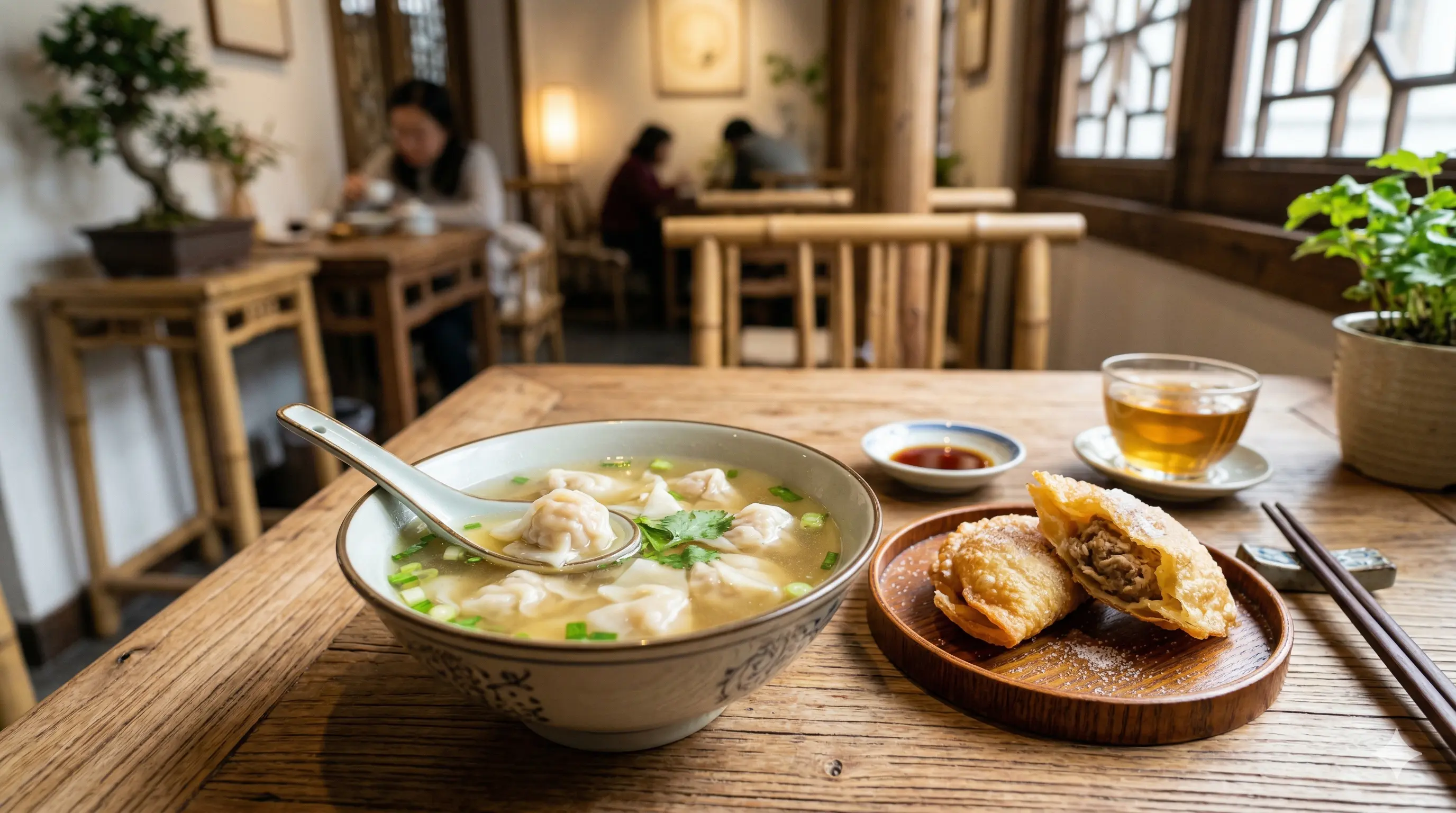
Chengdu-style wontons (called 抄手, not 馄饨) can be ordered in clear broth rather than chili oil. 红油抄手 (red oil wontons) are the spicy version. Ask for 清汤抄手 (qīngtāng chāo shǒu) for the clear broth version.
Order: 清汤抄手 (Qīngtāng chāoshǒu)
Sweet Rice Balls (汤圆 / 赖汤圆)
Glutinous rice balls filled with sesame, peanut, or red bean paste, served in warm sweet broth. Zero heat. Sold at dedicated shops — Lai Tangyuan (赖汤圆) is a well-known local chain. Also available at street food stalls on Jinli Street and Kuanzhai Alley.
Completely safe for low-spice eaters, and genuinely delicious.
San Da Pao (三大炮)
A Chengdu street snack: glutinous rice balls thrown dramatically into a metal plate (the "pao" / cannon effect), then rolled in sesame and soybean powder and served with brown sugar syrup.
Sweet, sticky, and entirely non-spicy. More of a snack or dessert than a meal, but worth trying on Jinli Street or Kuanzhai Alley.
Cold Jelly Dessert (冰粉, Bīng fěn)
A cold, slightly sweet jelly made from a plant starch, served with brown sugar syrup, dried fruits, and toppings of your choice. Light, refreshing, and not spicy. Very popular in summer, but sold year-round at street food stalls.
Steamed or Braised Dishes at Regular Restaurants
Many Sichuan restaurants serve steamed fish, braised pork belly (红烧肉), and stir-fried vegetables that are not significantly spicy. The issue is identification — menus can be confusing.
Practical approach: Tell the server 不要太辣 (bù yào tài là — not too spicy) when ordering, and they'll often steer you toward or adjust the milder items. In busy local restaurants, pointing and asking 辣不辣? (là bù là — is this spicy?) gets a straight answer.
Hot Pot for Non-Spicy Eaters
Hot pot is the one dining experience in Chengdu that most travelers feel anxious about if they don't eat spicy food. Here's how to handle it.
Choose the Right Broth
Most hot pot restaurants in Chengdu offer 鸳鸯锅 (yuānyāng guō) — a divided pot with spicy broth on one side and a mild broth on the other. This is the standard choice for mixed groups.
The mild side options are usually:
- 清汤 (qīngtāng): Plain broth — genuinely mild, sometimes bland
- 番茄锅 (fānqié guō): Tomato broth — lightly acidic, flavorful, no heat
- 菌汤锅 (jūntāng guō): Mushroom broth — earthy and mild
Recommendation for non-spicy eaters: Ask for 鸳鸯锅 with 番茄底 (tomato broth) on your side. It's flavorful enough to make the meal enjoyable without relying on spice.
What to Dip In
The dipping sauce at Chengdu hot pot is usually sesame oil, with optional additions (garlic, coriander, oyster sauce). This sauce has no heat — you control it entirely.
What to Order (Ingredients)
Everything you cook in your own broth takes on that broth's flavor, not the adjacent spicy broth's. Order:
- Thinly sliced beef or lamb (a couple of plates)
- Tofu varieties (豆腐, 豆腐皮)
- Mushrooms (蘑菇)
- Leafy vegetables (蔬菜)
- Glass noodles (粉丝) or potato slices (土豆片)
Start conservatively. The menus are long and you'll have more food than you expect.
How to Communicate "Not Spicy" to Servers
These phrases cover most situations. Show the characters on your phone if pronunciation feels difficult:
| What you want | Chinese | Pinyin |
|---|---|---|
| Not spicy | 不辣 | bù là |
| Less spicy | 少辣 / 微辣 | shǎo là / wēi là |
| No Sichuan peppercorn | 不要花椒 | bù yào huājiāo |
| Is this spicy? | 辣不辣? | là bù là? |
| I can't eat spicy food | 我不能吃辣 | wǒ bù néng chī là |
At most local restaurants, showing these on a phone is enough. Servers deal with these requests regularly — you won't confuse or offend anyone.
What to Avoid (Or Order With Caution)
Mapo tofu (麻婆豆腐): Famously spicy and numbing. The heat is largely from the sauce. Can sometimes be ordered less spicy, but the dish is built around heat — if you're spice-averse, skip it or order a very small portion to try.
Fish-fragrant eggplant (鱼香茄子): Despite the name, there's no fish — but there is chili. Moderately spicy at most places.
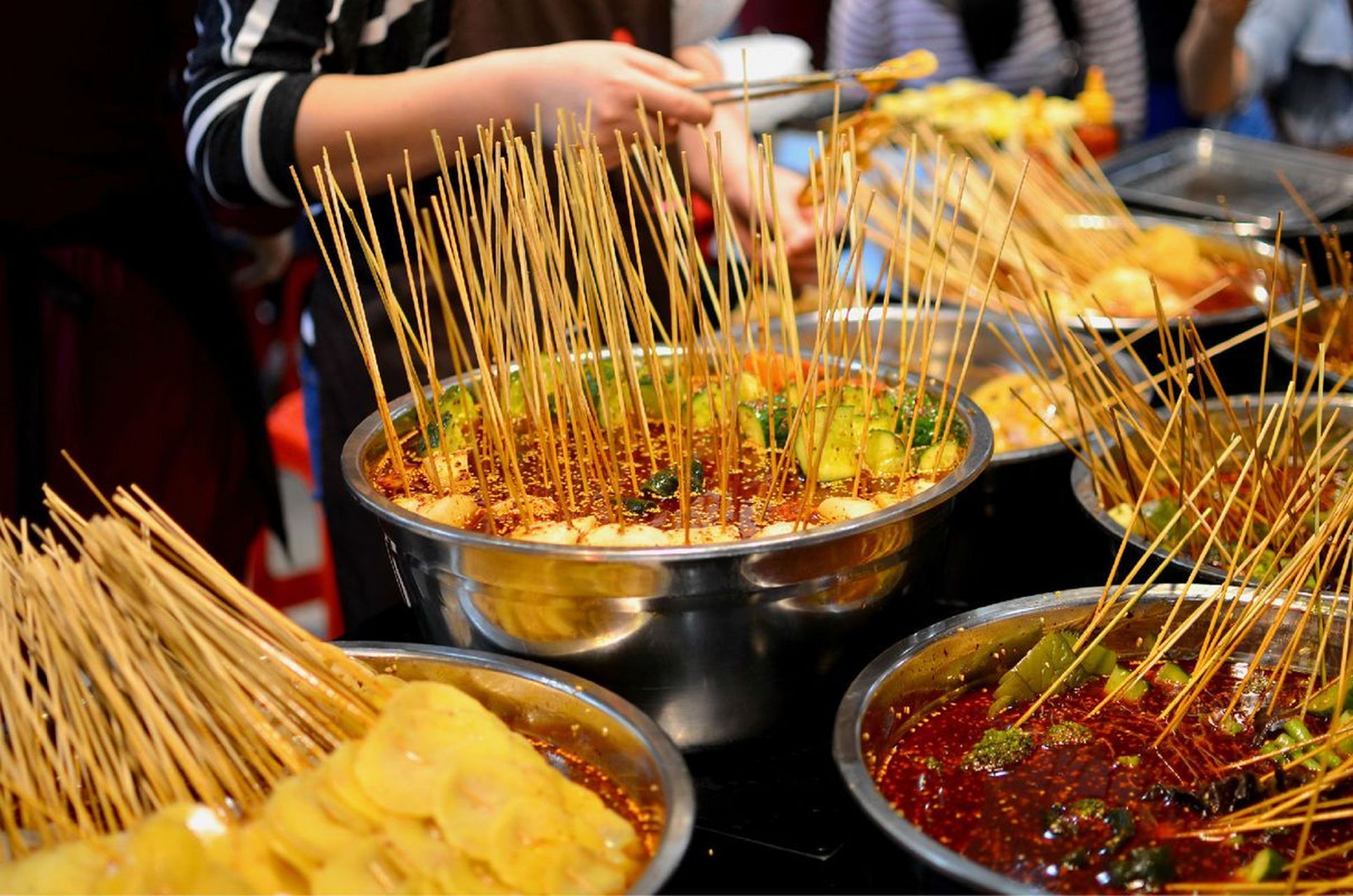
Chengdu-style cold dishes (凉菜): Many cold dishes in Chengdu are dressed in red chili oil. They look mild but aren't. Ask before ordering.
Spicy beef (麻辣牛肉) or spicy tripe dishes: Clearly spicy — the name tells you.
Backup Options: Non-Sichuan Food in Chengdu
Chengdu is a large, cosmopolitan city. If you hit a wall with Sichuan food, you have options:
- Cantonese restaurants (粤菜): Mild, seafood-focused cuisine. Every major Chinese city has them.
- Hot dry noodles (热干面): Originally from Wuhan but common in Chengdu, served with sesame paste, minimal heat.
- Congee (粥) places: Plain rice porridge with various mild toppings — good for mornings.
- Convenience stores (7-Eleven, FamilyMart): Onigiri, sandwiches, pre-packaged items — zero spice, available everywhere.
You are never more than a short walk from something you can eat.