Where to Eat in Chengdu — Food Streets, Markets, and Local Spots
Chengdu has too many food options, which is its own problem. This guide cuts through the choice by describing the main food areas, what kind of eating each one is good for, and which ones are worth your limited time.
The Main Food Areas
Chunxi Road Area — Widest Variety
What it is: Chengdu's commercial center has the highest concentration of restaurants of any area in the city. Everything from ¥10 noodle windows to multi-floor Cantonese restaurants exists within a 15-minute walk of Chunxi Road station.
Good for:
- First-time visitors who want to explore without committing to one cuisine
- Multiple meals in one area over several days
- Late-night eating (restaurants and stalls stay open past midnight)
What you'll find:
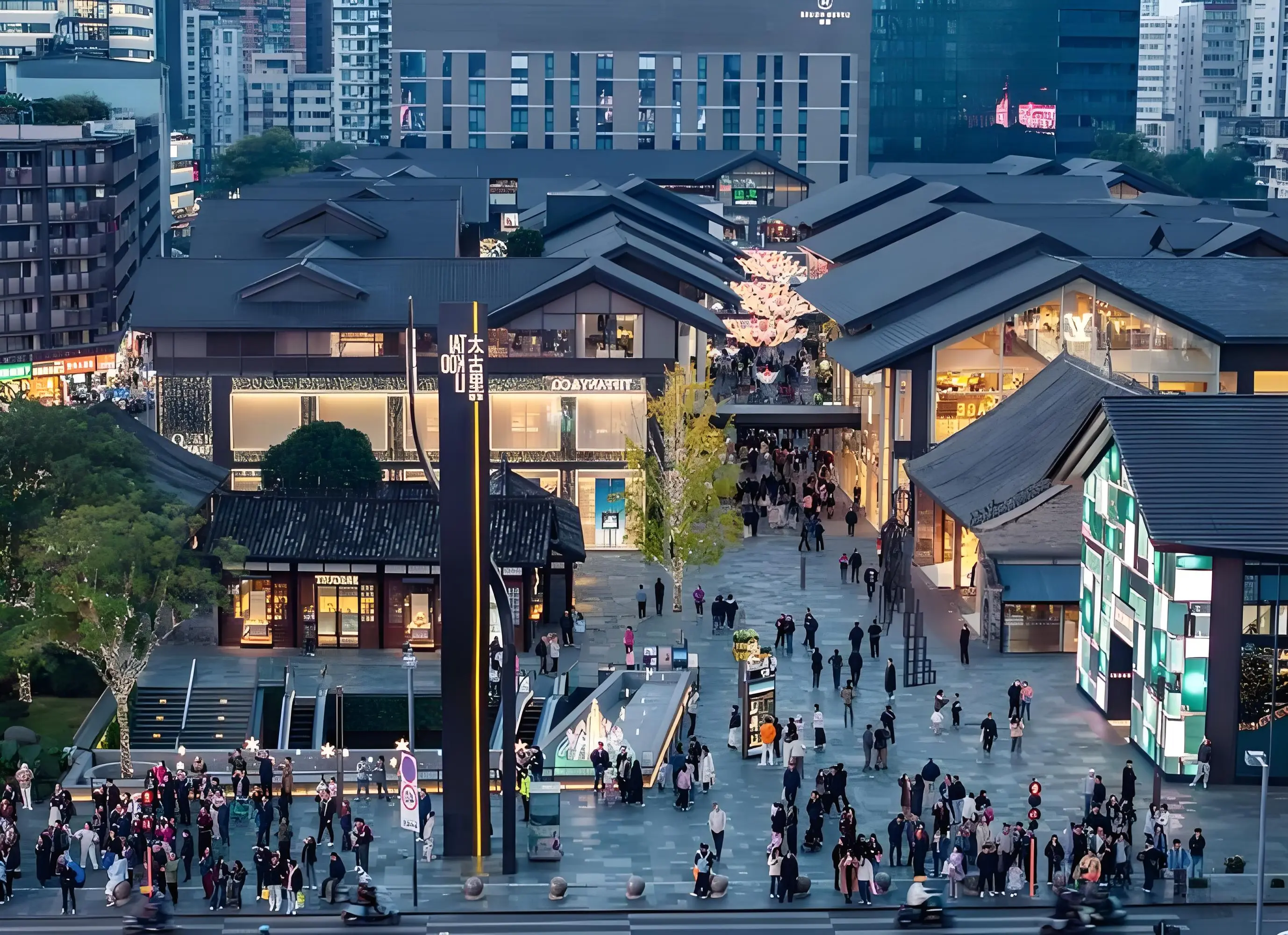
- Basement food halls in the IFS and Taikoo Li buildings (easier for tourists — branded, visible menus, some English)
- Side-street noodle shops and small restaurants on 沙帽街 and surrounding lanes (real prices, less English)
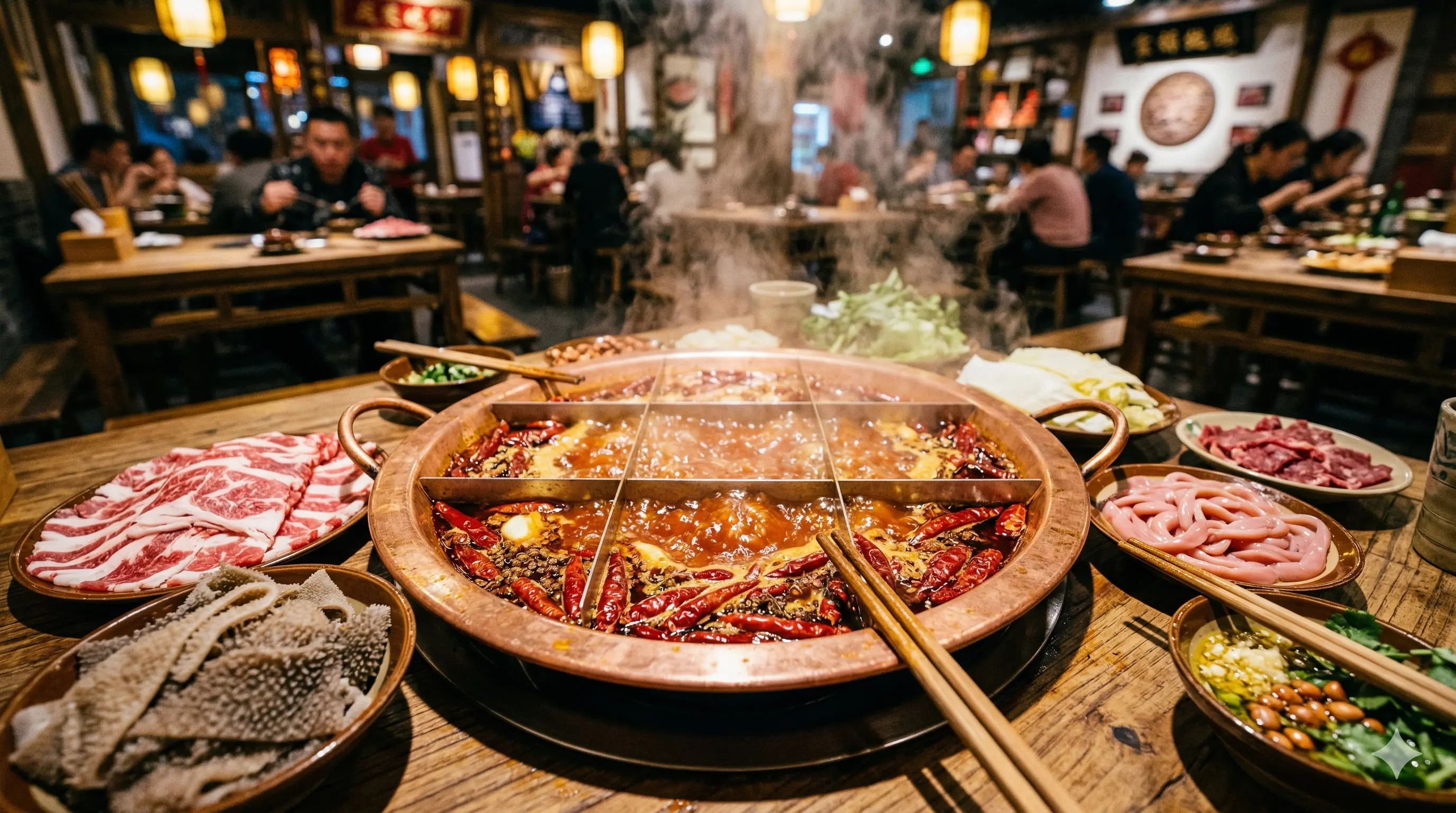
- Hot pot restaurants in every tier from ¥50/person to ¥200+/person
Honest note: The immediate Chunxi Road pedestrian zone skews toward chain restaurants and tourist-facing options. Walk one or two blocks off the main street to find better food at lower prices.
Jinli Street (锦里) — Tourist Food, Done Reasonably Well
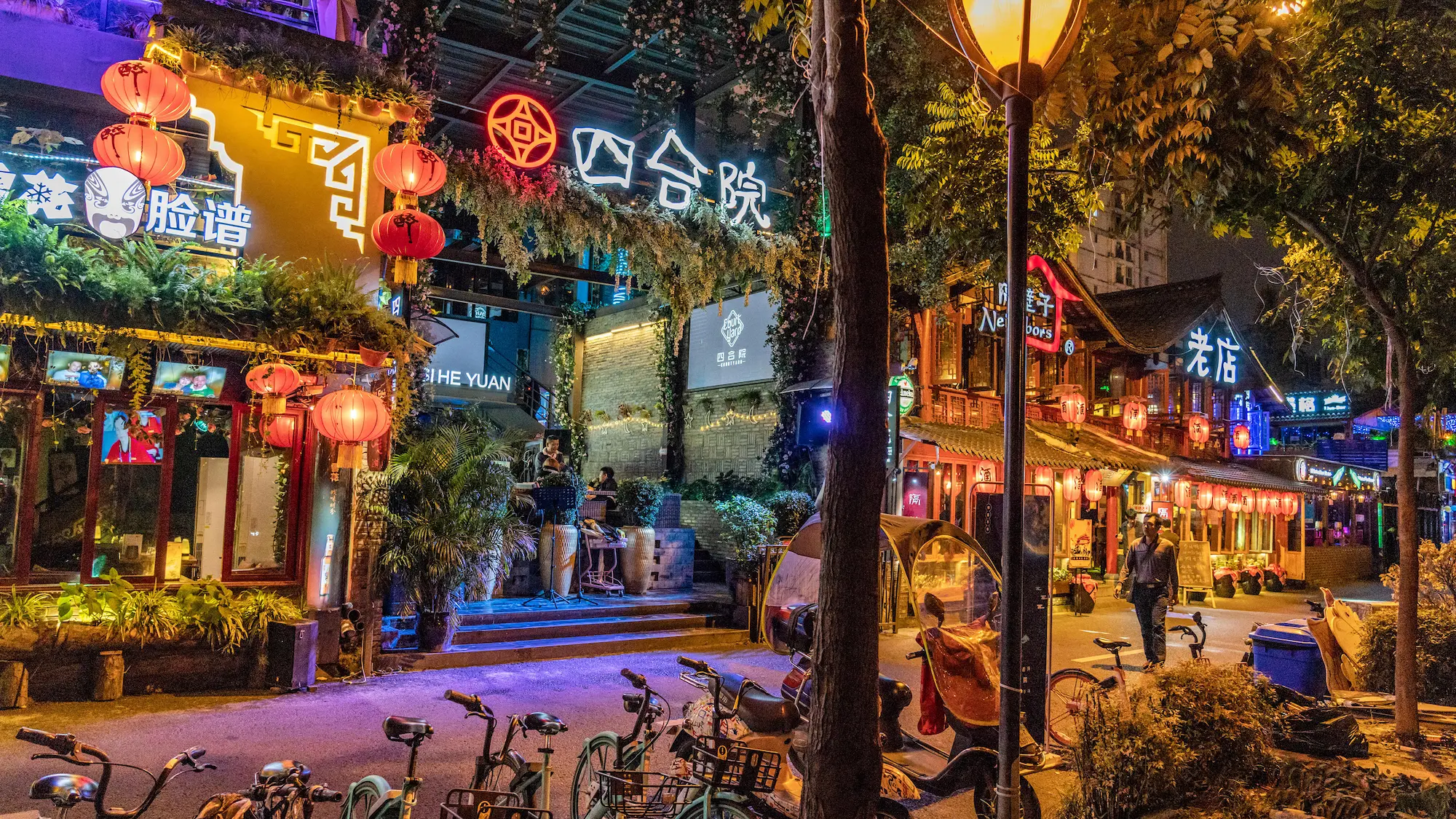
What it is: A pedestrian street adjacent to Wuhou Shrine with snack vendors, sit-down restaurants, and an overall night market atmosphere.
Good for: First-time visitors who want to try multiple local snacks without committing to a full meal; afternoon snacking during a Wuhou/Jinli visit.
What you'll find:
- 三大炮 (glutinous rice balls with brown sugar — worth trying)
- 冰粉 (cold jelly dessert — genuinely good, ¥10–15)
- 兔头 (spiced rabbit head — Chengdu local specialty, try if curious)
- Sit-down restaurants serving mainstream Sichuan dishes at tourist-area prices
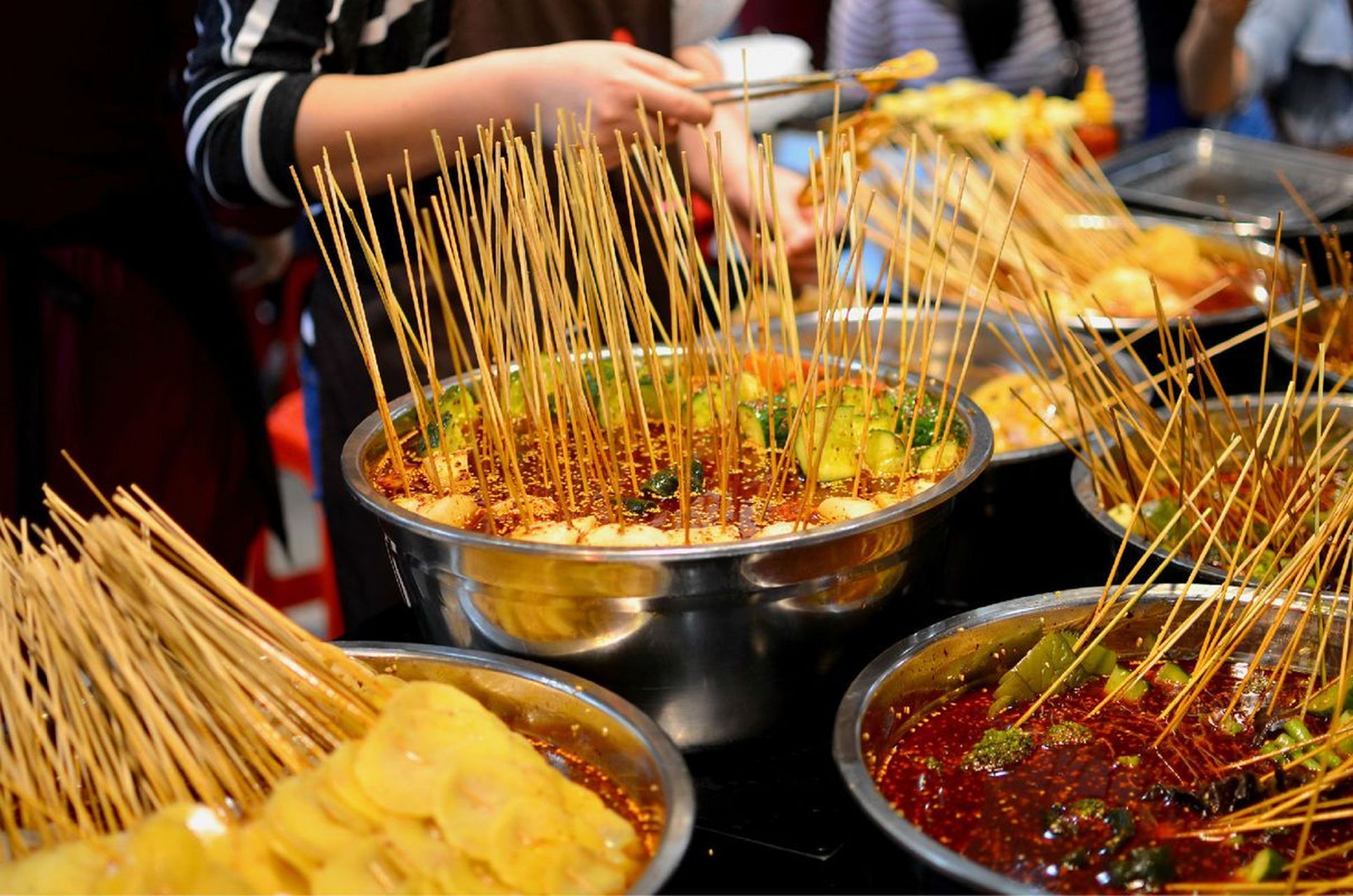
- 串串 skewer stalls along the street
Honest note: Jinli is touristy and the prices are inflated compared to non-tourist areas. The snacks are fine; the sit-down restaurants are convenient but not particularly memorable. Treat it as a snacking and atmosphere experience, not your best meal of the trip.
Kuanzhai Alley Area — Teahouses and Local Street Eating
What it is: The lanes themselves have snack vendors and tea houses; the surrounding streets have local restaurants that serve the neighborhood rather than tourists.
Good for: Slower eating, teahouse experiences, and finding unspectacular but genuine local lunches.
What you'll find:
- Gaiwan tea (盖碗茶) at traditional teahouses inside the lanes: ¥30–60, refilled continuously, worth the sit
- Small restaurants on streets east of the lanes serving 担担面, 抄手, braised pork rice
- Snack vendors inside the lanes: similar to Jinli but slightly less crowded on weekday mornings
Honest note: The food street itself is touristy. The real eating value in this area is the teahouse experience and the restaurants on the quieter adjacent streets.
Wenshu Monastery Area — Unpretentious Local Eating
What it is: The streets around Wenshu Monastery are a mixed residential/commercial neighborhood with no particular tourist infrastructure. Restaurants here serve the local community.
Good for: Genuine price points, no tourist markup, accessible local dishes.
What you'll find:
- Noodle shops open from early morning (钟水饺, 担担面, 素面 — plain noodles)
- Small rice plate restaurants (盖饭) for ¥15–30 lunches
- Occasionally very good Sichuan home-cooking restaurants that you wouldn't stumble onto in a tourist area
Honest note: This area has no particular "attraction" for food tourism — it's just where people eat. The quality is consistent and the prices are honest. Worth combining with a Wenshu Monastery visit.
Yulin Neighborhood (玉林) — Local Evening Life
What it is: A residential neighborhood southwest of the city center, known for its density of local bars, small restaurants, and a lifestyle that feels nothing like the tourist areas.
Good for: Later evenings, travelers who want to eat and drink where Chengdu locals actually spend their evenings.
What you'll find:
- Small hot pot restaurants and 串串 stalls without tourist pricing
- Independent bars and cafés (Yulin has Chengdu's most established independent café scene)
- Mahjong halls (if you want to see local nightlife culture from the outside)
How to get there: Taxi or DiDi from city center, ¥15–25 depending on your starting point. About 15–20 minutes from Chunxi Road.
Honest note: This is not a tourist spot and doesn't look like one. You won't find English menus. Bring a translation app and point at what neighboring tables are eating.
People's Square Area and Surrounding Markets
What it is: The neighborhood around People's Park (人民公园) has a famous outdoor tea garden and some of the best casual breakfast options in the city.
Good for: Morning tea culture, breakfast noodles, watching Chengdu life rather than tourist Chengdu.
What you'll find:
- The park tea garden (¥20–40 per pot) — large, outdoor, full of locals playing cards and mahjong
- Breakfast stalls on surrounding streets: 豆浆 (soy milk), 油条 (fried dough sticks), 包子 (steamed buns), noodles
- Local wet market (菜市场) on adjacent streets if you want to see what people actually buy and eat
Night Food in Chengdu
Chengdu has a genuine night food culture. After 9pm:
- Chunxi Road and surrounding alleys: Still active with stalls and late-opening restaurants
- Er Xian Qiao area (二仙桥): A more local, less polished night food street popular with younger Chengdu residents — 串串香, grilled skewers, cold noodles
- Any residential neighborhood after 8pm: Street-food stalls appear alongside footpaths — grilled corn, sweet potato, local snacks
Ordering Strategies for Non-Chinese Speakers
At restaurants with no English menu:
- Look at what other tables are eating and point
- Use Google Translate camera function to photograph the menu
- Show the server your phone with: 推荐菜是什么?(What do you recommend?) — most will point to something
At hot pot restaurants:
Ingredients are displayed on a counter or in a fridge — you point and pick. Broth choice is the one language moment: say 鸳鸯锅 (half and half) or show it on your phone.
At noodle shops:
Most noodle shops have 2–5 items. Point to what the person ahead of you ordered. Specify 少辣 (less spicy) if needed.
What to Skip
Most famous chain hot pot restaurants during peak dining hours (6–8pm weekdays, all weekend):
The queue is 1–2 hours and the food is not meaningfully different from a good local place that seats you immediately. Ask your hotel for a nearby local recommendation instead.
The food court inside every major mall:
Not specifically bad, but generic. The same budget is better spent on street food or a proper local restaurant.