If you only want the safest first order, do this:
- Choose a yuan yang pot (鸳鸯锅) with tomato broth on the mild side
- Order 1–2 plates of thinly sliced beef or lamb
- Add one tofu item, one mushroom item, and one leafy vegetable
- Finish with glass noodles or rice noodles
- For sauce, start with sesame oil + garlic + spring onion
That combination is easy, practical, and works well even if you are unsure about spice.
What Actually Happens at a Hot Pot Restaurant
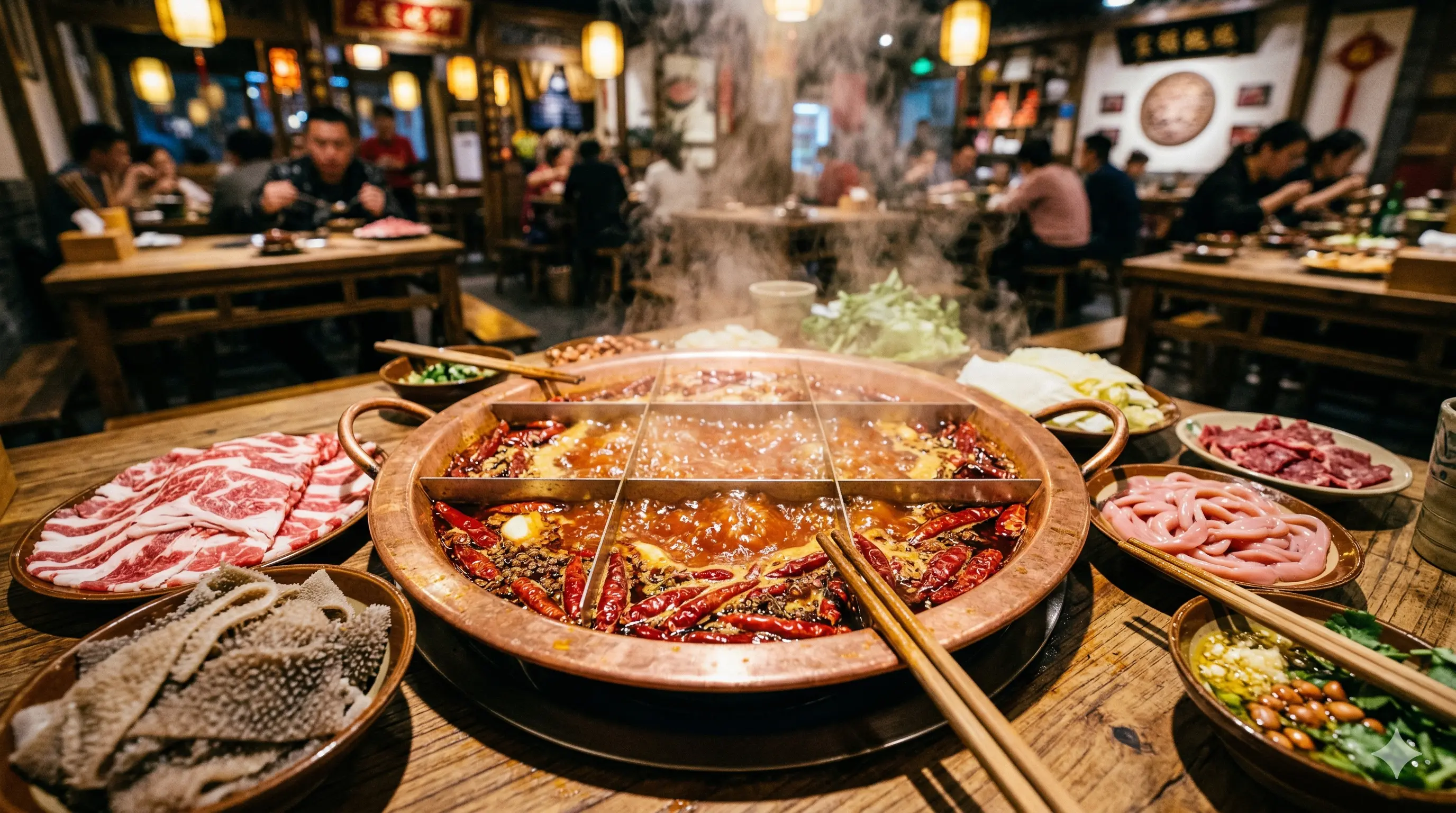
A typical Chengdu hot pot meal works like this:
- You sit at a table with a built-in burner
- You choose a broth, which is brought to the table in the pot
- You order raw ingredients such as meat, vegetables, tofu, and noodles
- You mix your own dipping sauce at a self-serve sauce station
- You cook the ingredients yourself in the boiling broth
- You keep ordering more as you go if needed
That is the whole system. There is no single “correct” way to eat hot pot.
Step 1: Choose Your Broth
This is the most important decision you make at the start.
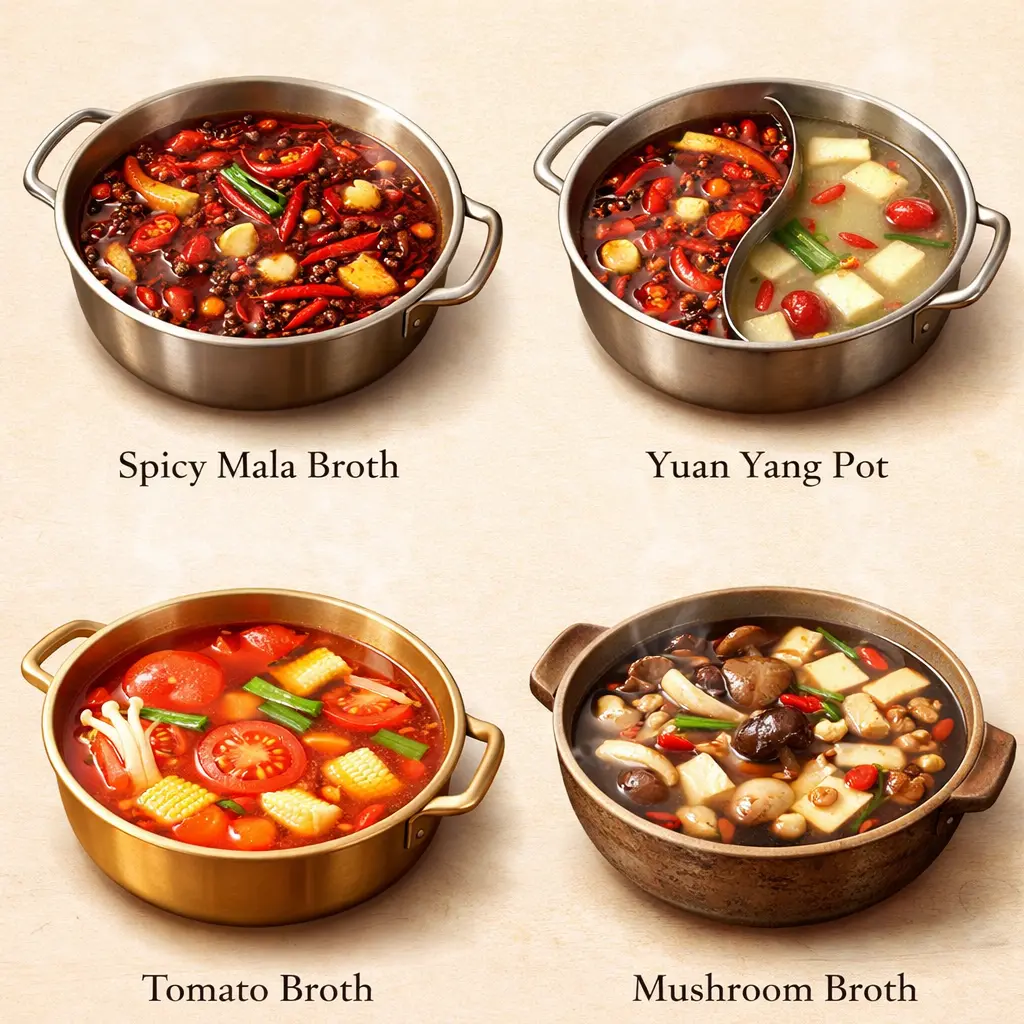
The Sichuan Spicy Broth
麻辣锅底 / mála guōdǐ
This is the classic Chengdu hot pot broth: dark red, oily, spicy, and numbing from dried chilies and Sichuan peppercorns.
If you like spicy food, this is absolutely worth trying. The flavor is deeper and more complex than a generic chili broth.
If you are unsure about your spice tolerance, do not order this as your only broth on a first visit.
The Divided Pot
鸳鸯锅 / yuānyāng guō
This is the most practical first-time choice.
One side of the pot is spicy, and the other side is mild. It works well for mixed groups, cautious eaters, and anyone who wants to compare both styles.
If this is your first Chengdu hot pot meal, this is usually the safest recommendation.
Mild Broth Options
| Broth | Chinese | Notes |
|---|---|---|
| Clear broth | 清汤 (qīngtāng) | Neutral and lightly savory |
| Tomato broth | 番茄锅 (fānqié guō) | Mild, slightly tangy, and the easiest choice for most first-timers |
| Mushroom broth | 菌汤锅 (jūntāng guō) | Earthy and rich |
| Bone broth | 骨汤锅 (gǔtāng guō) | Heavier, fattier, and more savory |
Best First-Time Recommendation
If you do not eat very spicy food, order:
鸳鸯锅 + 番茄锅 on the mild side
That gives you a safe side of the pot that still has real flavor.
Step 2: Build Your Dipping Sauce
Most Chengdu hot pot restaurants have a self-serve sauce station. You build your sauce in a small bowl.
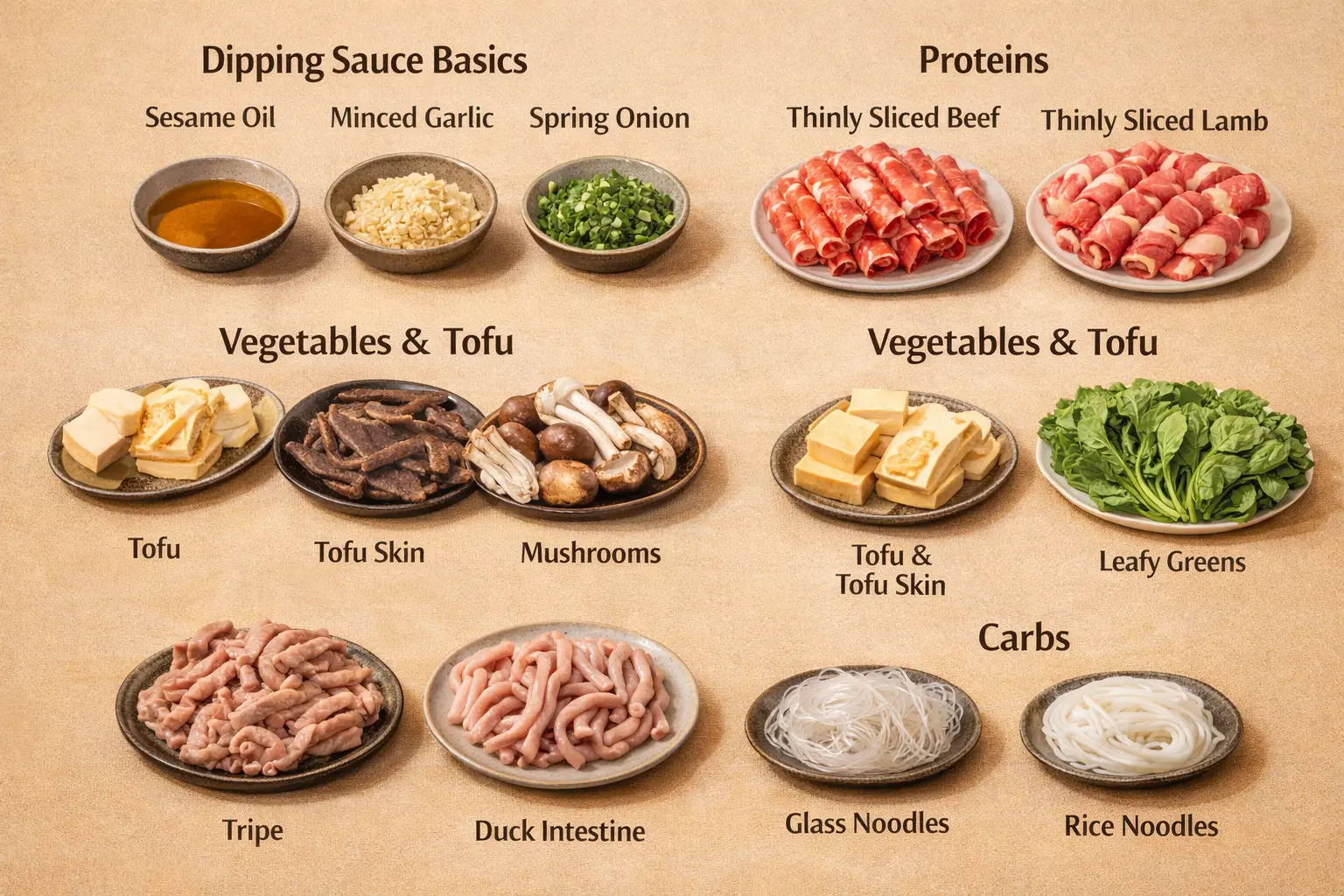
A Good Simple Starting Sauce
Start with:
- 香油 (xiāng yóu) — sesame oil
- 蒜泥 (suàn ní) — minced garlic
- 小葱 (xiǎo cōng) — spring onion
That is enough for a first visit.
Common Additions
- 香菜 (xiāng cài) — coriander / cilantro
- 耗油 (háo yóu) — oyster sauce
- 芝麻酱 (zhīmá jiàng) — sesame paste
What Not to Overdo
Be careful with:
- chili oil
- vinegar
Too much of either can overpower everything else.
Step 3: What to Order
The menu can be long, but you do not need to order everything. A first meal is better if you keep it simple.
A Good First Order
For two people, a balanced first order could be:
- 1–2 plates of thinly sliced beef
- 1 plate of thinly sliced lamb or another protein
- 1 tofu item
- 1 mushroom item
- 1 leafy vegetable
- 1 noodle item for the end
You can always order more later.
Must-Order Proteins
Thinly Sliced Beef
肥牛 / féiniú
This is the easiest and most reliable choice. It cooks quickly, works in both spicy and mild broth, and suits almost everyone.
Thinly Sliced Lamb
肥羊 / féiyáng
Very similar in use to the beef, with a slightly stronger flavor.
For More Adventurous Eaters
Tripe
毛肚 / máodù
One of Chengdu’s most iconic hot pot ingredients. The texture is the main appeal. It cooks very quickly and is best eaten while still tender.
Duck Intestine
鸭肠 / yācháng
Another classic ingredient, known more for texture than flavor. Order a small amount if you want to try something more traditional.
Brain / Offal
These are common in traditional hot pot restaurants, but they are not necessary for a first visit.
Vegetables and Tofu
Order at least 2–3 of these to balance the meal:
- Mushrooms (菌类 / jūnlèi) — shiitake, enoki, king oyster, and others
- Tofu (豆腐 / dòufu) — soft or firm
- Tofu skin (豆腐皮 / dòufu pí) — one of the best hot pot textures
- Potato slices (土豆片 / tǔdòu piàn) — mild and filling
- Leafy greens (菠菜 / 生菜) — spinach or lettuce
Carbs (Best Ordered Near the End)
- Glass noodles (粉丝 / fěnsī)
- Rice noodles (米线 / mǐxiàn)
- Instant noodles (方便面 / fāngbiànmiàn)
These absorb broth well and help finish the meal.
Step 4: Cooking Times
Approximate times for common hot pot ingredients in boiling broth:
| Ingredient | Cook time |
|---|---|
| Thinly sliced beef / lamb | 30–60 seconds |
| Tripe (毛肚) | 7–10 seconds |
| Duck intestine | 3–5 seconds |
| Fish fillets | 2–3 minutes |
| Tofu | 2–4 minutes |
| Mushrooms | 3–5 minutes |
| Leafy greens | 1–2 minutes |
| Potato slices | 4–6 minutes |
| Noodles | Usually 3–5 minutes |
Important Reminder
The thinly sliced meats cook very fast. Do not leave them in for several minutes or they will become tough.
Managing the Spice
If you are nervous about heat, stick mostly to the mild side of a divided pot at first.
A good approach is to test the same ingredient in both sides of the pot and see what you enjoy.
If something is too spicy:
- drink milk if available
- eat plain rice if you ordered it
- order a cold, sweet drink
Water usually does not help much.
Also remember that Sichuan peppercorn creates a numbing / tingling feeling, not just heat. For many first-time visitors, that sensation is surprising but not unpleasant once they understand what it is.
Practical Notes
Ordering
Some restaurants use a paper checklist. Others use a tablet.
If you are confused, ask a server. Helping unfamiliar customers is routine in busy restaurants.
Replenishing the Broth
As the meal goes on, the broth level drops. Staff will usually top it up.
If not, say:
加汤 (jiā tāng) — “add broth”
Payment
Most restaurants accept WeChat Pay or Alipay. Many also accept cash. Do not assume foreign cards will always work.
Budget
Expect roughly ¥80–150 per person at a mid-range local hot pot restaurant with drinks.
Duration
Hot pot is not a quick meal. Budget 1.5–2 hours, especially for your first time.
Final Recommendation
If this is your first Chengdu hot pot meal, keep it simple:
- order a yuan yang pot
- make a basic sesame oil sauce
- start with beef, tofu, mushrooms, greens, and noodles
- try the spicy side gradually
- order more only after you see how much you actually eat
That is enough for a very good first experience.