Dujiangyan Day Trip from Chengdu — Irrigation System and Panda Center
Dujiangyan is the most logistically straightforward day trip from Chengdu. No train booking required, no long bus journey — the intercity metro takes you there directly in about an hour. It's a good choice when you want to leave the city without a complicated day.
This guide covers what's at Dujiangyan, how to plan your time, and how to combine it with the nearby panda facility.
What to Expect Before You Go
Dujiangyan rewards visitors who arrive with some context. It's a 2,300-year-old water management system, not a visually spectacular landscape or a theme park. If you understand what you're looking at, it's genuinely impressive. If you show up without context, you're looking at river infrastructure.
The short context: In 256 BC, a Qin dynasty engineer named Li Bing designed a system to split the Min River into channels, control flooding, and irrigate the Chengdu Plain — without a dam. The system has been continuously maintained and expanded for over 2,000 years. The Chengdu Plain is still one of China's most productive agricultural areas partly because of this system.
It's a UNESCO World Heritage Site. The site itself includes the original water-splitting structures, adjacent temples, and a historic town.
Who finds this most interesting: Travelers with an interest in history, engineering, or Chinese civilization. Also: visitors who have already done the more visually driven sites (Panda Base, Leshan) and want something different.
Who might prefer Leshan instead: Anyone who wants maximum visual impact or isn't particularly interested in historical sites. → Leshan vs Dujiangyan: Which Day Trip to Do?
Getting There
Intercity Metro (Recommended)
This is what makes Dujiangyan such an easy trip from Chengdu.
Route:
- Take Chengdu Metro Line 2 to Xipu Station (犀浦站)
- Transfer to the Chengdu-Dujiangyan Intercity Railway (成灌快铁)
- Ride to Dujiangyan Station (都江堰站)
Total journey: 55–70 minutes from most central Chengdu hotels
Cost: Metro fare (¥12–15) = approximately ¥18–22 total each way
No advance booking required. Trains run every 15–30 minutes during the day.
From Dujiangyan Station to the sites: The irrigation system entrance is about 3km from the station. Take a taxi (¥10–15, 10 minutes) or the local tourist bus (check current routing — it has changed before).
DiDi Directly from Chengdu
A DiDi from central Chengdu to Dujiangyan is an option but costs ¥100–150 and takes 50–80 minutes depending on traffic. The intercity metro is faster, much cheaper, and more reliable. Only consider a direct car if you're with a group splitting the cost or have a specific reason.
Planning Your Day
Dujiangyan works as either a half-day trip or a full day depending on what you combine it with.
Half-Day (Irrigation System Only)
- Leave Chengdu by 8:30–9am
- Arrive at the irrigation system by 10am
- Spend 2–2.5 hours at the site
- Lunch in Dujiangyan town
- Back in Chengdu by 3–4pm
This leaves your afternoon free for Chengdu activities.
Full Day (Irrigation System + Panda Center)
- Leave Chengdu by 8am
- Irrigation system: 9:30am–12pm
- Lunch: 12pm–1pm
- Panda Center: 1:30pm–4:30pm
- Return to Chengdu: arrive 6–7pm
This is the most common way to do a Dujiangyan day trip. See the panda section below for details.
Full Day (Irrigation System + Qingcheng Mountain)
- Leave Chengdu by 8am
- Irrigation system: 9:30am–12pm
- Transit to Qingcheng Mountain front entrance: 20–30 min by taxi
- Front mountain cable car and temple area: 12:30pm–4pm
- Return to Chengdu: arrive 6–7pm
Good for hikers or anyone who wants a combination of history and outdoor scenery.
At the Irrigation System (都江堰)
Entry: ~¥80 per adult (verify current price before visiting)
What you're walking through:
Lidui Park (离堆公园): The main entrance area. Contains the original "fish-mouth" divider structure (鱼嘴) visible from viewing platforms, the Erwang Temple (二王庙, dedicated to Li Bing and his son), and walking paths along the river channels.
The fish-mouth divider (鱼嘴): The central structure Li Bing built to split the river. You can walk out onto a suspension bridge directly above it and look down at the dividing flow. This is the most directly impressive view of the engineering.
Erwang Temple (二王庙): A temple built on the cliff above the divider, dedicated to Li Bing and his son Er Lang, who managed the system after him. The terraced courtyard and river views from the temple are the most scenic part of the site.
Anlan Suspension Bridge (安澜索桥): A suspension footbridge crossing the outer river channel. Mildly dramatic, good views, short crossing.
Recommended route: Enter at Lidui Park, walk to the fish-mouth viewing area, cross the bridge, visit Erwang Temple, then loop back. This takes 2–2.5 hours at a relaxed pace.
The Dujiangyan Panda Center (China Conservation and Research Center for Giant Panda, Dujiangyan Base)
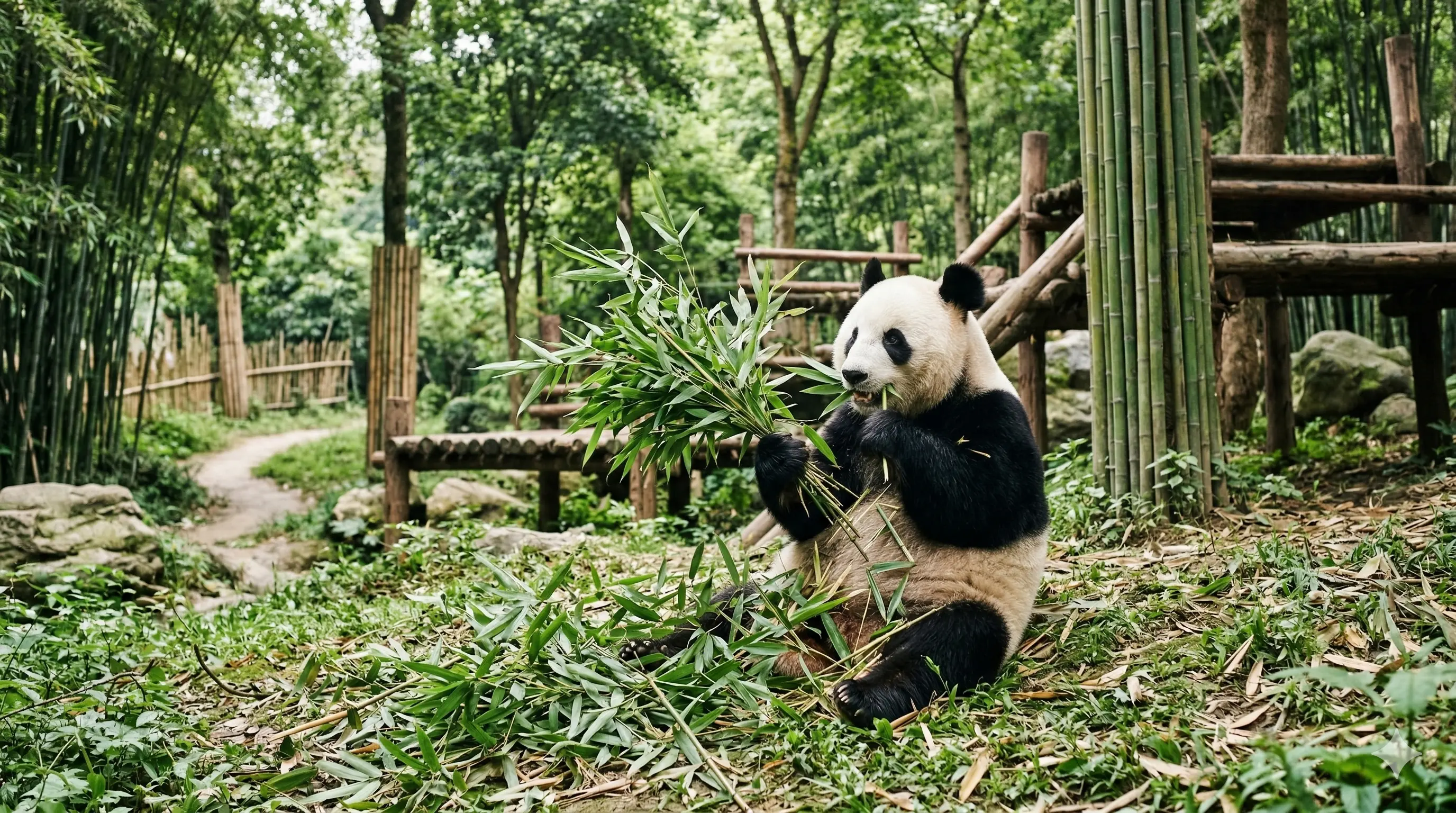
What this is: A separate facility from the main Chengdu Panda Base, also operated by the Chinese government for giant panda breeding and conservation. Less visited than the Chengdu base, more naturalistic in setting.
Why it's different:
- Fewer crowds — significantly quieter than the main Chengdu base
- The enclosures are larger and more naturalistic (pandas are in forested areas rather than landscaped enclosures)
- Different life-stage groups to see: you may encounter animals in different settings than the Chengdu base
- Some visitors prefer this facility; others prefer the Chengdu base's more concentrated sightings
Entry: ~¥150 per adult (higher than the Chengdu base)
Time needed: 2–3 hours
Should you go here if you've already been to the Chengdu Panda Base?
It depends on how interested you are. If pandas were a highlight of your Chengdu visit and you want a different version of the experience, yes. If you've ticked the panda experience and are looking for variety, the irrigation system alone may be more interesting.
Should you go here instead of the Chengdu base?
For a first visit, the Chengdu base is more efficient (closer, easier to reach, better-known morning timing). The Dujiangyan base is better as a second panda experience or for visitors specifically interested in the conservation context.
Book in advance: Particularly on weekends. Tickets available on Trip.com, Ctrip, or the official WeChat mini-program.
Eating in Dujiangyan
Dujiangyan is a small city with inexpensive local food near the main sites.
The area around the irrigation system entrance has restaurants serving:
- 钵钵鸡 (Bō bō jī — Leshan-style cold skewers with sesame sauce): A local specialty worth trying; different from Chengdu 串串
- Standard Sichuan rice dishes and noodles
- Cheap set lunches at restaurants near the entrance gate
Budget ¥30–60 per person for a full lunch. No need for a specific restaurant recommendation — the row of places near the site entrance all serve similar food at similar prices.
Practical Notes
What to wear:
- The irrigation site has uneven paths and steps — comfortable walking shoes
- Qingcheng Mountain (if you're adding it) requires proper walking shoes; the back mountain requires hiking footwear
Weather:
Dujiangyan is in a mountain-adjacent area and can be cooler and cloudier than Chengdu city. Bring a light layer even in summer.
Morning timing at the panda center:
Unlike the Chengdu base where the 8am feeding is the defining experience, the Dujiangyan panda center works reasonably well for afternoon visits. Morning is still better, but the all-or-nothing timing pressure is less acute.