Chengdu Must-Try Dishes — What to Order as a First-Timer
This is not a list of "50 dishes you must try." It's a focused list of the dishes that actually define eating in Chengdu — what they are, what to expect from each, and whether they're suitable if you don't eat much spice.
The List at a Glance
| Dish | Chinese | Spice level | Notes |
|---|---|---|---|
| Chengdu Hot Pot | 成都火锅 | ★★★★★ (spicy broth) / ★☆☆☆☆ (mild broth) | Must-do experience; mild broth option always available |
| Dan Dan Noodles | 担担面 | ★★★☆☆ | Adjustable spice; don't skip this |
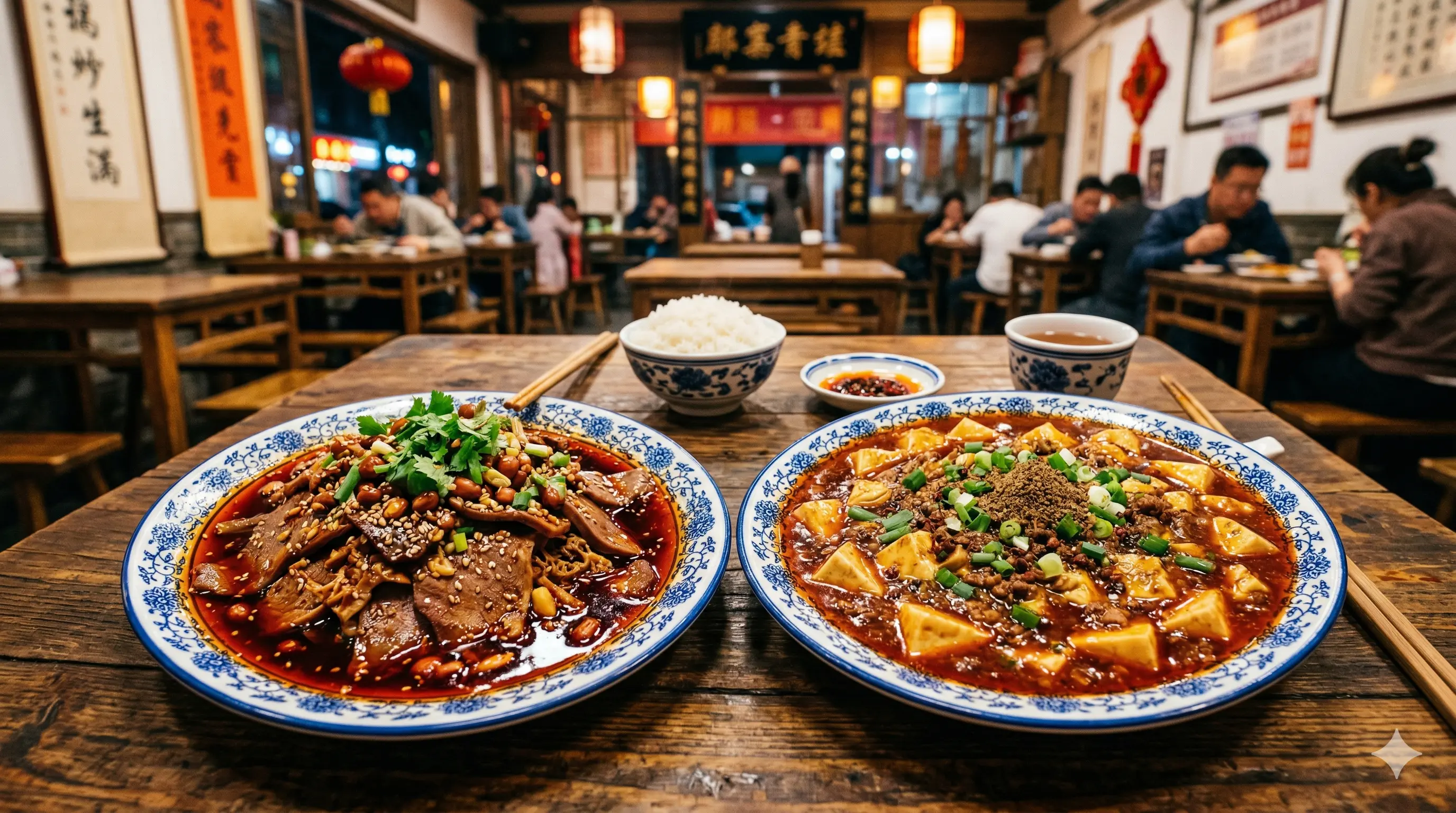
| Mapo Tofu | 麻婆豆腐 | ★★★★☆ | Iconic, genuinely spicy and numbing |
| Zhong Dumplings | 钟水饺 | ★☆☆☆☆ | Sweet-savory sauce, no real heat |
| Husband and Wife Beef | 夫妻肺片 | ★★★☆☆ | Cold dish, chili oil dressing |
| Kung Pao Chicken | 宫保鸡丁 | ★★☆☆☆ | Milder than most Sichuan dishes |
| Wonton Soup | 清汤抄手 | ★☆☆☆☆ | Order the clear broth version |
| Sweet Rice Balls | 赖汤圆 | ☆☆☆☆☆ | Sweet snack, no heat |
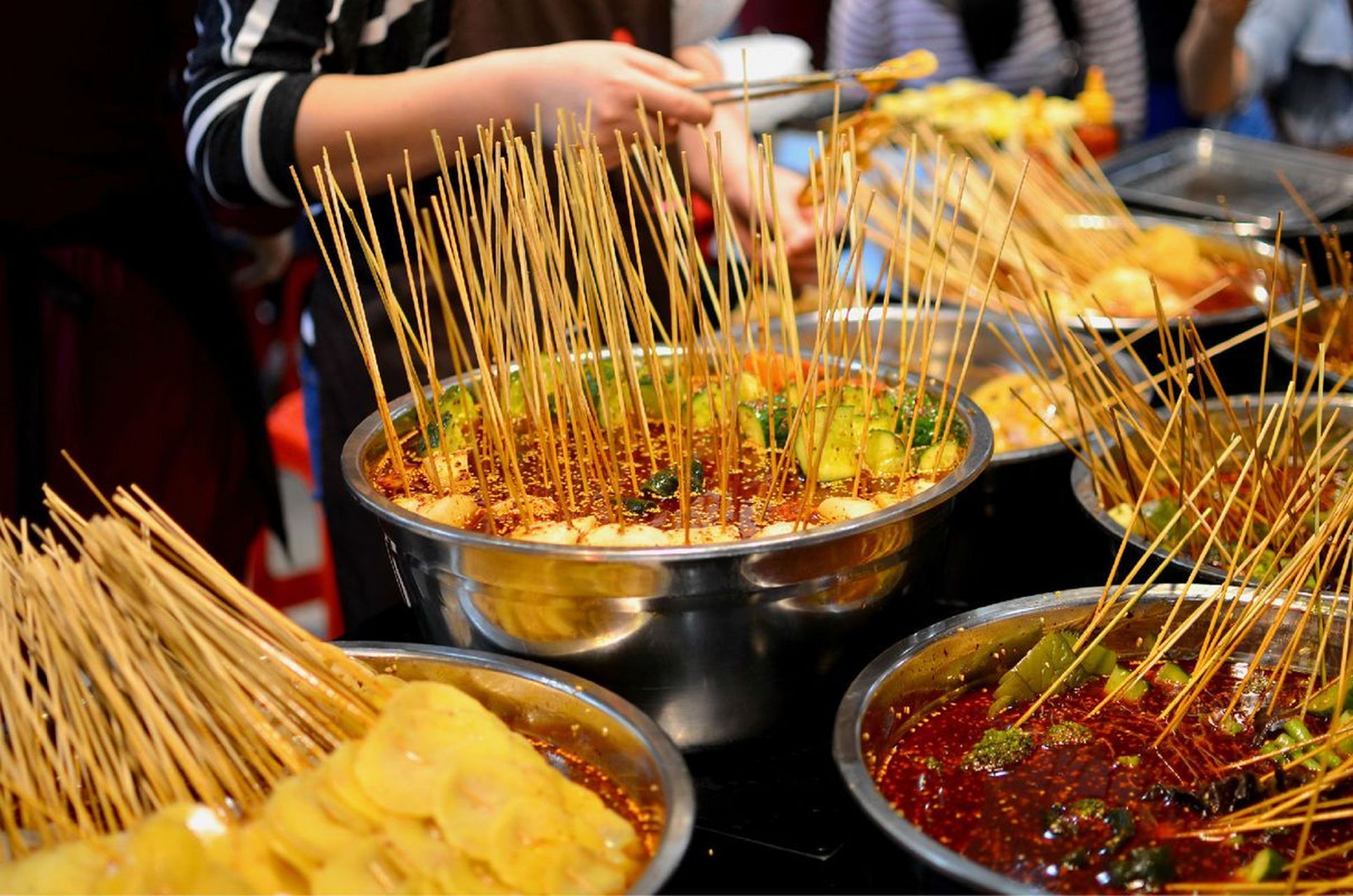
| Skewer Hot Pot | 串串香 | ★★★☆☆ | Casual, fast, cheap; spice adjustable |
| Twice-Cooked Pork | 回锅肉 | ★★☆☆☆ | Stir-fried pork belly, moderately spiced |
The Dishes in Detail
Chengdu Hot Pot (成都火锅)
The definitive Chengdu food experience. A boiling pot of broth at your table — you cook raw ingredients in it and eat as you go.
The broth: Chengdu hot pot broth (麻辣锅底) is genuinely, significantly spicy and numbing. It's built on chili oil, dried chilies, and Sichuan peppercorns. Do not underestimate it if you're not used to Sichuan food.
What to order: Most restaurants offer a divided pot (鸳鸯锅) with spicy broth on one side and mild broth on the other. The mild side is usually 清汤 (plain broth) or 番茄锅 (tomato broth). Order ingredients you're comfortable with: thinly sliced beef, vegetables, mushrooms, tofu.
Dipping sauce: Sesame oil-based, no heat — you control your own dipping sauce at most Chengdu hot pot places.
Where to have it: Everywhere. The question is which type: regular sit-down hot pot (正规火锅) or the faster, cheaper skewer version (串串香). For a first experience, a mid-range regular hot pot restaurant gives you the full experience.
Budget: ¥80–150 per person at a good local restaurant. More at famous chains.
→ Full guide: How to Order Chengdu Hot Pot for the First Time
Dan Dan Noodles (担担面)
Thin wheat noodles served with a sauce of ground pork, chili oil, sesame paste, preserved vegetables (芽菜), and sometimes a soft-boiled egg.
This is one of Chengdu's most important street dishes. At a good local noodle shop, the sauce is complex — simultaneously sesame-rich, slightly sour, mildly spicy, and savory. It does not taste like any noodle dish you've had elsewhere.
Spice: Moderate. Can be ordered 少辣 (less spicy) or 微辣 (just a hint of heat). Ask and most places will accommodate.
Where to find it: Any local noodle shop, breakfast stall, or casual restaurant. Don't eat it at a tourist-facing restaurant where it's been toned down — find a place where locals eat breakfast.
Price: ¥10–20 per bowl. Inexpensive.
Mapo Tofu (麻婆豆腐)
Silken tofu in a sauce of fermented black bean paste (豆豉), ground pork, chili oil, and Sichuan peppercorns. Served over rice.
This is one of the most famous Sichuan dishes globally — but the authentic Chengdu version is much spicier and more numbing than most international versions. The 麻 (numbing/tingling) from Sichuan peppercorns is prominent.
Spice: High. The tofu soaks up both heat and the numbing sensation. If you have low spice tolerance, this is not your starting dish. Try a small amount and see.
Why it's worth ordering once: The combination of textures (silky tofu against the oily sauce) and the layered flavor (savory, spicy, numbing) is genuinely interesting. Even if you can't finish it, the first few bites are worth having.
Where to have it: A dedicated Sichuan restaurant, not a tourist buffet. The dish at a proper restaurant is different in quality.
Zhong Dumplings (钟水饺)
Small pork dumplings (smaller than most Northern Chinese dumplings) served in a sweet-savory sauce made from soy sauce, sesame oil, chili oil, and sugar.
Spice: Very mild. The sauce has trace amounts of chili oil but no significant heat. This is one of the most accessible Chengdu dishes for low-spice eaters.
What makes them distinctive: The sweet-savory sauce balance is unusual — it's not what most people expect from dumplings. The pork filling is often slightly seasoned with soy and ginger.
Where to find them: Dedicated 钟水饺 shops (the "Zhong Shuijiao" brand has multiple locations), local breakfast restaurants, and traditional teahouse menus.
Price: ¥12–25 for a portion of 8–12 dumplings.
Husband and Wife Beef (夫妻肺片)
Despite the name, no actual "wife" was harmed in the making of this dish. It's cold sliced beef (and sometimes offal) dressed in a sauce of chili oil, Sichuan peppercorns, sesame, and vinegar.
Spice: Moderate. The chili oil gives it clear heat; the peppercorn gives numbing.
Why order it: It's a great cold appetizer before a hot pot meal. The combination of flavors (spicy, numbing, slightly sour, sesame-rich) is very Chengdu.
What it contains: Traditional versions include tripe, tendon, or tongue alongside the beef. If you're unfamiliar with offal, ask what's in the version you're ordering, or order 纯牛肉片 (just beef slices).
Kung Pao Chicken (宫保鸡丁)
Diced chicken stir-fried with dried chilies, peanuts, Sichuan peppercorns, and a sweet-savory sauce.
Spice: Milder than most Sichuan dishes. The dried chilies add heat, but the sauce balance keeps it manageable for most people.
Why it's on this list: Because it's genuinely good in Chengdu in a way that Chinese restaurant versions abroad often aren't. The original Sichuan version has more peppercorn and less sweet sauce than what most Western visitors have encountered before.
Good starting dish for visitors nervous about Sichuan spice — enough character to feel local, accessible enough not to shock.
Wonton Soup (清汤抄手)
Chengdu-style wontons (called 抄手) in clear broth. Thin wrappers, pork filling, mild soup.
Spice: None in the clear broth version. Order 清汤抄手 specifically — the alternative 红油抄手 (in chili oil) is significantly spicier.
When to eat it: Excellent breakfast or lunch option. Light, warming, not overwhelming.
Sweet Rice Balls (赖汤圆)
Glutinous rice balls (汤圆) filled with sesame paste or peanut, served in warm sweet broth. The 赖 (Lai) brand is the most famous Chengdu version.
Spice: Zero. This is a dessert / sweet snack.
When to eat: As a street snack at Jinli or Kuanzhai Alley, or at a traditional dessert shop. Not a main meal, but a genuine part of Chengdu food culture.
Skewer Hot Pot (串串香 / 冒菜)
A casual, standing-or-quick-sit version of hot pot. Skewers of ingredients pre-cooked in a spicy broth, then priced per skewer (often ¥0.5–3 per skewer).
Spice: Adjustable — you can ask for less spicy.
Why it's worth trying: It's how Chengdu locals eat hot pot casually. Less ceremonial than a full hot pot restaurant, much cheaper, and faster. Line up, pick your skewers, pay, eat.
Where to find it: Street food stalls throughout the city. Concentrated near Kuanzhai Alley and Chunxi Road.
Twice-Cooked Pork (回锅肉)
Pork belly that's first boiled, then sliced and stir-fried with fermented black bean paste, chili peppers, and leeks.
Spice: Moderate. Not as aggressive as mapo tofu or hot pot.
Why order it: One of the oldest and most fundamental Sichuan home-cooking dishes. A good 回锅肉 at a proper local restaurant tastes nothing like the dish adapted abroad.
How to Use This List
If you eat spicy food: Work through everything. Prioritize hot pot (full spicy broth), mapo tofu, and dan dan noodles. These are the most distinctively Chengdu.
If you don't eat spicy food: Start with Zhong dumplings, sweet rice balls, clear wonton soup, and kung pao chicken (which is milder). Use a shared hot pot with mild broth on your side. You will eat well.
If you only have one meal in Chengdu: Hot pot. Even with the mild broth option. The experience of sitting around a boiling pot and cooking your own food is different from any other meal you'll have in China.